
On this page14 sections
- How supplements are regulated in the UK
- 1. Check who is behind the brand
- 2. Read the whole label, not the front of the pack
- 3. Look for ingredient sources and specifications
- 4. Understand lab reports vs certificates
- 5. Read reviews with care
- 6. Check directions, warnings and serving amounts
- 7. Compare price per serving, not price per bottle
- 8. Check delivery, returns and support
- Red flags in supplement marketing
- How to compare brands fairly
- How Nature Elixirs approaches this
- Frequently asked questions
- Sources and how this guide was researched
How to Choose a Supplement Brand in the UK: Quality, Testing and Label Transparency
There are thousands of supplement brands selling in the UK, and most of them look trustworthy in an advert. This guide sets out what to check instead: who is behind the product, what the label actually tells you, what testing evidence looks like, and the warning signs that a brand is cutting corners.
This guide is published by Nature Elixirs, a UK supplement brand. It is not an independent comparison, and we don’t rank brands here. We use our own products as examples where it helps to show what a check looks like in practice. The checklist works for any brand.
- Who is behind itA named business with contact details you can actually use.
- The labelEvery ingredient with its amount per serving, clear directions and cautions.
- The evidenceBatch-specific lab reports where they matter, not just logos or certificates.
- The claimsOnly authorised health claims. No promises to treat, cure or prevent anything.
- The valueCost per serving and the amount of each ingredient, not the size of the bottle.
How supplements are regulated in the UK
In the UK, food supplements are regulated as food, not as medicines. There is no licence or approval before a supplement goes on sale. The rules still apply, though: a supplement must not be sold with claims to prevent, treat or cure a medical condition, and health claims must be authorised on the Great Britain nutrition and health claims register. You can read the government’s consumer guidance on food supplements for the full picture.
Because nothing is checked before it reaches the shelf, the responsibility for getting things right sits with the brand. That is why the checks below matter.
1. Check who is behind the brand
A trustworthy brand is easy to identify and easy to contact. Look for the business name, a UK contact address, an email address and a phone number. If something goes wrong, you need to know who is responsible.
The government’s consumer guidance also warns to take extra care with online marketplaces, where it can be hard to tell who is actually selling a product or where it came from. Buying directly from the brand, or from a retailer you know, removes that doubt.
2. Read the whole label, not the front of the pack
The front of a pack sells. The nutritional information panel informs. A good label tells you:
- Every active ingredient, with its amount per serving in milligrams or micrograms.
- The serving size, and how many servings the pack contains.
- The form of each ingredient: the extract ratio, any standardisation, and for oils, the amounts of the key fatty acids.
- The full ingredient list, including capsule shells and fillers.
- Directions, a “do not exceed” line and cautions for pregnancy, medication and age.
Here is what that looks like on our own range, per daily serving:
| Product | What the label states per serving |
|---|---|
| KSM-66® Ashwagandha | 300mg KSM-66® root extract, 10:1, 5% withanolides (2 tablets) |
| Omega-3 Fish Oil | 2,000mg fish oil providing 660mg EPA and 440mg DHA (2 softgels) |
| Apple Cider Vinegar Complex+ | 1,044.82mg apple cider vinegar, 130mg turmeric, 130mg ginger, 100mg capsicum (2 capsules) |
| 4-in-1 Blend | 400mg each of shilajit, sea moss, lion’s mane and ginseng extract (2 capsules) |
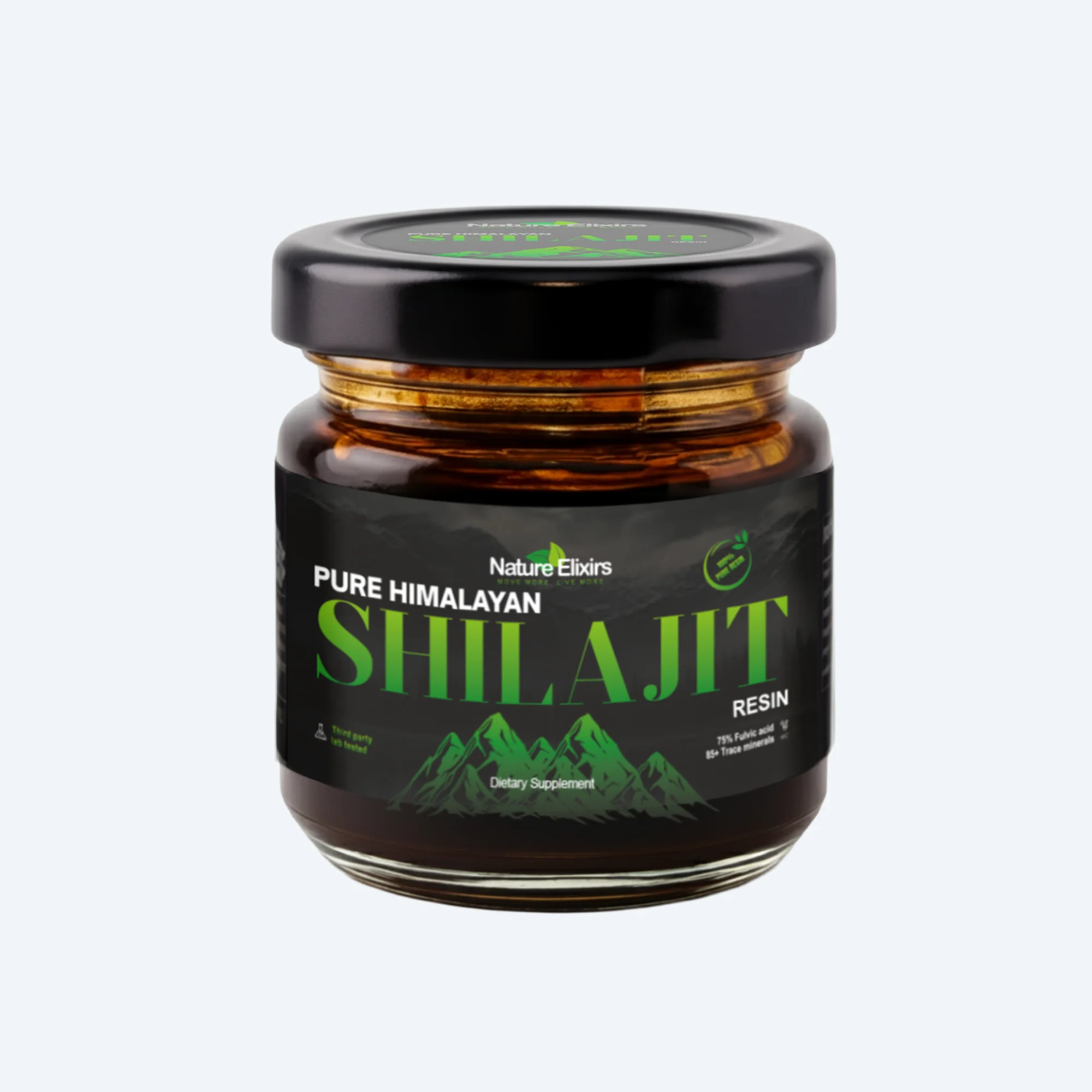
| Pure Himalayan Shilajit Resin | Pure resin, nothing added, 30g jar |
Be cautious of “proprietary blends” that give one total for several ingredients. They stop you seeing how much of each ingredient you are paying for.
3. Look for ingredient sources and specifications
Good brands say where their key ingredients come from and what form they are in. For a plant extract, that means the species, the part of the plant and the extract specification. For a branded ingredient, the brand should name it. KSM-66®, for example, is a specific root extract from one producer. For a mineral resin such as shilajit, it means the origin and how it was purified.
Our shilajit resin, for example, is sourced from the Himalayas at around 18,000 feet, and we explain the sourcing in our guide to high-altitude Himalayan shilajit.
4. Understand lab reports vs certificates
“Lab tested” is one of the most common claims on supplement packaging, and one of the least useful on its own. What matters is the evidence behind it.
| Certificate | Batch lab report (certificate of analysis) | |
|---|---|---|
| What it is | A document saying a facility or product meets a standard | The measured results for a specific batch |
| What it shows | That something was assessed | Actual numbers, such as heavy metals, against limits |
| Linked to your product? | Often not to a specific batch | Yes, by batch number |
| What to look for | Who issued it, what it covers, whether it is current | Lab name, sample or batch ID, test dates, methods, results and limits |
A useful lab report names the laboratory, identifies the sample or batch, gives the test dates and methods, and shows results alongside the limits they are judged against. For products where contaminants are a known concern, such as mineral resins, seaweeds and fish oils, look for heavy-metal results, and for oils, freshness (oxidation) results too.
For our Pure Himalayan Shilajit Resin, we publish the full batch reports on our lab reports page, including an 11-page report for batch SJ2509 from AGROLAB LUFA, so you can match the report to the jar.
5. Read reviews with care
Reviews are useful for practical things: delivery speed, packaging, taste, how easy the capsules are to swallow, and how the brand handles problems. They are less useful as evidence that a product works, because one person’s experience can’t tell you what the product will do for you.
A few habits help. Read a spread of ratings, not just the five-star ones. Look for detail rather than vague praise. And notice when a brand uses customer comments to make health promises on its behalf. Under UK advertising rules, testimonials a brand chooses to show count as its own claims.
6. Check directions, warnings and serving amounts
A responsible label tells you how much to take, when to take it and when not to. Look for a clear daily serving, a “do not exceed” line, and cautions for pregnancy, breastfeeding, medication and age. The government’s guidance is to follow the label, never exceed the recommended dose, and speak to a healthcare professional first if you are pregnant, breastfeeding, have a medical condition or take prescribed medication.
7. Compare price per serving, not price per bottle
Bottle prices are misleading because bottles hold different numbers of servings, and servings hold different amounts. Two quick sums make any two products comparable:
- Cost per serving = price ÷ servings in the pack.
- Cost per unit of the ingredient you care about = cost per serving ÷ milligrams of that ingredient per serving.
A cheaper bottle with half the amount per serving isn’t better value. A Which? investigation into omega-3 supplements found that some products sold as “high strength” contained less EPA and DHA per dose than shoppers might expect, which is exactly what this calculation catches.
8. Check delivery, returns and support
Before you order, check the delivery options and costs, the returns policy and how to reach customer service. A brand that is confident in its products makes these easy to find. Ours are on our delivery information and returns and refunds pages, and you can reach us on +44 7709 201844 or at info@natureelixirs.com.
Red flags in supplement marketing
- Claims to treat, cure or prevent a disease or condition.
- Promises of weight loss, detox, “fat burning” or a specific amount of weight lost.
- Health benefits that aren’t authorised in the UK, such as reduced anxiety, better sleep or higher testosterone.
- “Proprietary blends” that hide how much of each ingredient you get.
- “Lab tested” with no report, or a report you can’t link to a batch.
- No business name, address or way to contact the seller.
- Prices far below everyone else’s, which the government’s guidance flags as a possible sign of counterfeits.
- Pressure tactics, such as countdown timers that reset or claims that stock is about to run out.
How to compare brands fairly
The most expensive or most heavily advertised brand isn’t automatically the best. Compare brands on the things that can be checked:
- IdentityA named business with UK contact details.
- Complete labelsEvery ingredient with its amount per serving, and no hidden blends.
- SpecificationsSpecies, plant part, extract ratio and standardisation where relevant.
- Testing evidenceBatch reports you can match to the product, where contaminants matter.
- ClaimsOnly authorised claims, with no disease or weight-loss promises.
- Directions and cautionsClear serving, a “do not exceed” line, pregnancy and medication advice.
- ValueCost per serving and per milligram of the ingredient you want.
- SupportClear delivery, returns and contact details.
If a problem does occur, the government’s guidance is to stop taking the supplement, speak to a healthcare professional, and report concerns about a supplement’s safety, labelling or claims to your local authority.
How Nature Elixirs approaches this
We wrote this checklist, so it is fair to ask how we measure up against it. Every product label in our range gives the amount of each ingredient per serving. We use named, specified ingredients such as KSM-66®, state extract ratios and standardisations, print directions, cautions and batch numbers, and make no disease or weight-loss claims. For our core product, Pure Himalayan Shilajit Resin, we publish batch lab reports so you can check the evidence yourself.
You can see the full range in our shop, and read our individual guides to KSM-66 ashwagandha, omega-3 labels, apple cider vinegar capsules and 4-in-1 supplements.
Frequently asked questions
Sources and how this guide was researched
This guide draws on UK government guidance, the Advertising Standards Authority, Which? and Nature Elixirs’ own product labels and published lab reports. Nature Elixirs publishes this guide and sells the products mentioned. It is not an independent review and it is general information, not medical advice.
- GOV.UK, food supplements: guidance for consumers: regulation, claims, buying online, safe use and reporting problems
- ASA, advice on health claims in ads for supplements: testimonials treated as claims
- ASA advice, weight control: food and food supplements: weight-loss claims
- Which?, “high strength” omega-3 investigation: label figures vs actual EPA and DHA per dose
- Nature Elixirs lab reports: batch reports for Pure Himalayan Shilajit Resin, including AGROLAB LUFA batch SJ2509
- Nature Elixirs product labels for KSM-66® Ashwagandha, Ultra Premium Omega-3, Apple Cider Vinegar Complex+ and the 4-in-1 Blend: amounts per serving
