
On this page11 sections
- What omega-3 fatty acids are
- EPA vs DHA: what is the difference?
- Why 2000mg of fish oil is not 2000mg of omega-3
- Per softgel or per serving?
- What omega-3 claims are allowed in the UK
- Oil form, freshness and storage
- Fish oil vs cod liver oil
- What to check before you order an omega-3 supplement
- Where Nature Elixirs Omega-3 fits
- Frequently asked questions
- Sources and how this guide was researched
Omega-3 Fish Oil in the UK: EPA, DHA and How to Read a 2000mg Supplement Label
Omega-3 labels are full of big numbers, and the biggest one is rarely the one that matters. This guide explains EPA and DHA, why a “2000mg” fish oil and 2000mg of omega-3 are different things, how to compare per softgel and per serving, and what else to check before you order.
This guide is published by Nature Elixirs. We sell an omega-3 fish oil, and we use our own label as the worked example because we can show you every figure on it. The checks work for any brand’s product.
- The number to compareEPA plus DHA per daily serving, in milligrams. Not the total fish oil figure.
- What “2000mg” meansUsually the weight of fish oil in a serving. Only part of that oil is EPA and DHA.
- Check the serving sizeWhether the figures are per softgel or per serving of two or more softgels.
- Check the quality detailsThe oil form, antioxidants, full ingredients, capsule material and storage advice.
- Claims to expectOnly the UK-authorised EPA and DHA wording, with its daily-intake conditions.
What omega-3 fatty acids are
Omega-3s are a family of fats your body can’t make in useful amounts, so they have to come from food. There are three you will see on labels:
- ALA (alpha-linolenic acid), the plant omega-3 found in foods such as flaxseed and walnuts.
- EPA (eicosapentaenoic acid), a long-chain omega-3 found mainly in oily fish.
- DHA (docosahexaenoic acid), another long-chain omega-3 found mainly in oily fish.
Fish oil supplements are bought for their EPA and DHA. NHS advice is to eat two portions of fish a week, one of them oily, and many people who don’t eat that much fish use a supplement instead.
EPA vs DHA: what is the difference?
EPA and DHA are both long-chain omega-3 fatty acids, and most fish oils contain both. They are listed separately because they are different molecules, and because the UK’s authorised health claims are written around them. A good label gives you each one in milligrams, rather than a single “omega-3” total.
| EPA | DHA | |
|---|---|---|
| Full name | Eicosapentaenoic acid | Docosahexaenoic acid |
| Main dietary source | Oily fish and fish oil | Oily fish and fish oil |
| Authorised UK claim (with EPA) | EPA and DHA contribute to the normal function of the heart | EPA and DHA contribute to the normal function of the heart |
| Authorised UK claims (DHA alone) | — | Maintenance of normal brain function; maintenance of normal vision |
| Daily intake the claims require | 250mg of EPA and DHA combined (heart claim) | 250mg of DHA (brain and vision claims) |
Why 2000mg of fish oil is not 2000mg of omega-3
Fish oil is a mixture of fats. EPA and DHA are only part of it, and the share depends on how concentrated the oil is. That is why a bottle can say “2000mg” on the front and give a much smaller EPA and DHA figure on the back.
A consumer investigation by Which? found exactly this problem: some supplements sold as “high strength” contained far less EPA and DHA per daily dose than shoppers might expect from the headline number. The fix is simple. Ignore the front of the pack and read the nutritional information panel.
Here is the calculation on the Nature Elixirs label. The oil is concentrated to 33% EPA and 22% DHA:
| Per two-softgel serving | Amount | How it is worked out |
|---|---|---|
| Fish oil | 2,000mg | The total oil in two softgels |
| EPA | 660mg | 33% of 2,000mg |
| DHA | 440mg | 22% of 2,000mg |
| EPA + DHA | 1,100mg | The figure to compare with other products |
For context, Which? measures omega-3 supplements against Scientific Advisory Committee on Nutrition guidance that people consume an average of 450mg of EPA and DHA a day. One serving of the Nature Elixirs oil gives 1,100mg.
Per softgel or per serving?
UK supplement labels give amounts per serving, and with fish oil a serving is often two softgels or more. Before you compare two products, divide by the number of softgels in a serving so you are comparing like with like.
| Label detail | Per serving (2 softgels) | Per softgel |
|---|---|---|
| Fish oil | 2,000mg | 1,000mg |
| EPA | 660mg | 330mg |
| DHA | 440mg | 220mg |
| EPA + DHA | 1,100mg | 550mg |
Then work out how long a bottle lasts: softgels in the bottle ÷ softgels per serving. Sixty softgels at two a day is 30 days. Divide the price by the number of days and you have a cost per day you can compare fairly across brands.
What omega-3 claims are allowed in the UK
EPA and DHA are among the few supplement ingredients with authorised health claims in Great Britain. Each claim has a condition: the product has to supply a set amount per day, and the label or page has to tell you what that amount is.
- EPA and DHA contribute to the normal function of the heart. The beneficial effect is obtained with a daily intake of 250mg of EPA and DHA.
- DHA contributes to the maintenance of normal brain function. The beneficial effect is obtained with a daily intake of 250mg of DHA.
- DHA contributes to the maintenance of normal vision. The beneficial effect is obtained with a daily intake of 250mg of DHA.
One serving of the Nature Elixirs oil provides 1,100mg of EPA and DHA, including 440mg of DHA, so it meets the intake set for each of these claims.
What a fish oil can’t lawfully say is that it treats, prevents or cures a disease, for example that it prevents heart attacks, treats depression or replaces medication. If you see claims like that, the seller isn’t following the rules.
Oil form, freshness and storage
Ethyl ester or triglyceride
Concentrated fish oils come in two main chemical forms: ethyl esters (EE) and triglycerides, including re-esterified triglycerides (rTG). Both are widely used in supplements. The label or product page should tell you which one you are buying. Nature Elixirs uses a concentrated ethyl ester oil (33% EPA, 22% DHA), and the directions are to take the softgels with a meal.
Freshness
Omega-3 fats are delicate and react with oxygen over time. Manufacturers measure this with three tests: peroxide value (PV), which measures early oxidation; anisidine value (p-AV), which measures later oxidation; and TOTOX, a combined figure. The industry body GOED sets voluntary maximums of 5 for peroxide value, 20 for anisidine value and 26 for TOTOX. A brand that tests its oil should be able to tell you its results.
Antioxidants help protect the oil. The Nature Elixirs softgels contain mixed tocopherols and a tocopherol-rich extract, both forms of vitamin E used for this purpose.
Storage
Keep fish oil in a cool, dry place out of direct sunlight, with the lid closed. Follow any storage instructions on the pack.
Fish oil vs cod liver oil
They are not the same product. Fish oil is pressed from the body of oily fish. Cod liver oil comes from the liver, and as well as omega-3 it contains vitamin A and vitamin D.
That matters most in pregnancy. The NHS advises not to take cod liver oil, or any supplement containing vitamin A (retinol), when you are pregnant, because too much vitamin A could harm the baby. If you are pregnant or breastfeeding, speak to your midwife, GP or pharmacist before taking any omega-3 supplement.
What to check before you order an omega-3 supplement
- EPA and DHA in milligramsListed separately, per serving, not just “omega-3” or “fish oil”.
- Serving sizeHow many softgels make a serving, so you can work out the per-softgel amount.
- Fish oil vs EPA + DHAThe total oil figure and the EPA and DHA figures are different numbers.
- Oil formEthyl ester or triglyceride, and the EPA and DHA percentages.
- Antioxidants and freshnessAdded vitamin E (tocopherols), and whether the brand can share oxidation results.
- Capsule materialBovine, fish or plant-based shell, which matters if you avoid certain ingredients.
- AllergensFish oil products contain fish and aren’t suitable for anyone with a fish allergy.
- CautionsAdvice for pregnancy, breastfeeding and medication, particularly blood-thinning medicines.
- ClaimsOnly the authorised EPA and DHA wording, with the daily amount needed.
Where Nature Elixirs Omega-3 fits
Our label gives every figure in this guide, per serving and per softgel, so you can check each one yourself.
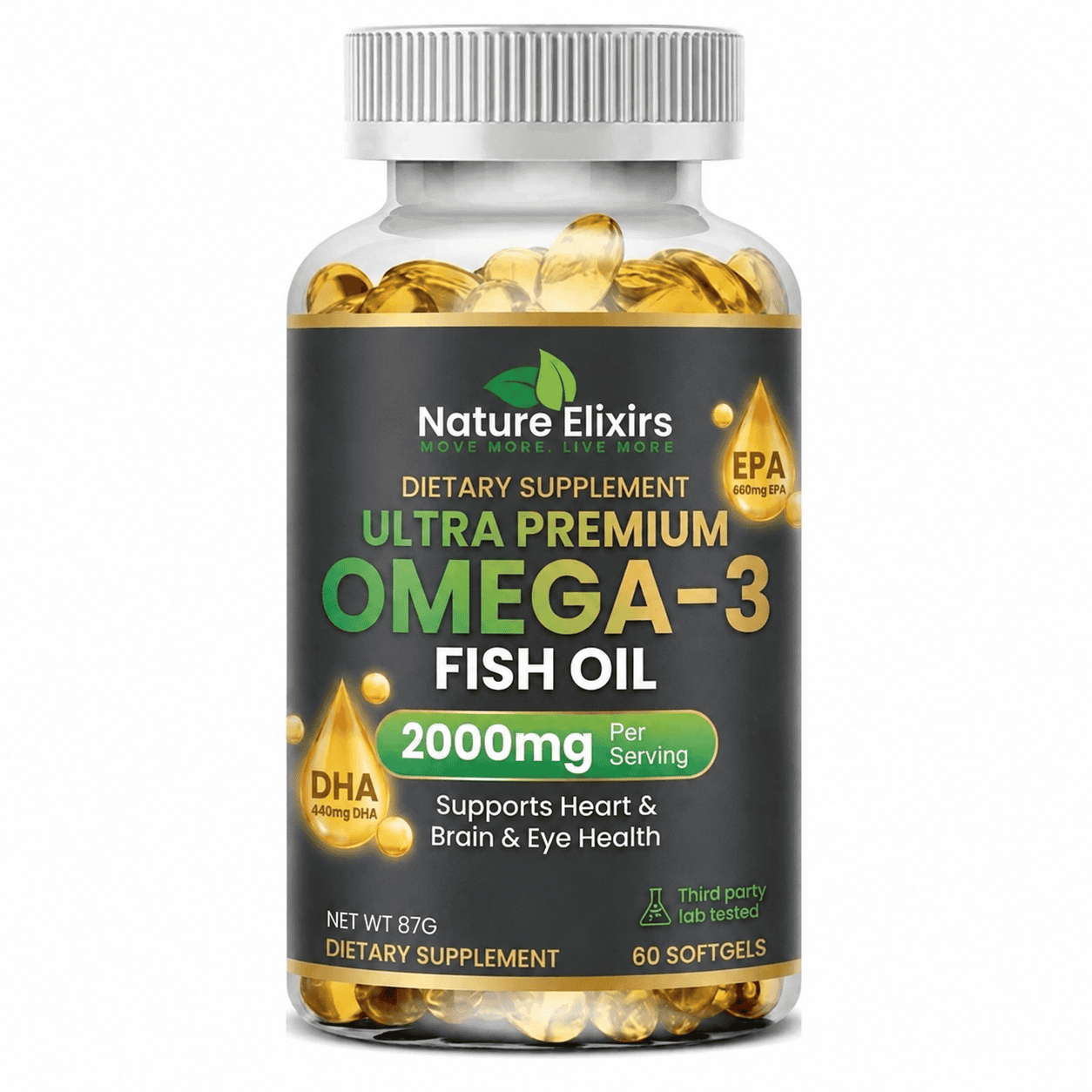
If a clearly labelled, high-EPA and DHA fish oil is what you are after, you can see the full details and order Nature Elixirs Omega-3 here.
Frequently asked questions
Sources and how this guide was researched
Product figures come from the Nature Elixirs Omega-3 product page. Claim wording and conditions come from the GB nutrition and health claims rules and published summaries of them. Benchmarks, freshness limits and pregnancy advice come from Which?, GOED and the NHS. Nature Elixirs publishes this guide and sells the product used as the worked example. It is general information, not medical advice.
- Nature Elixirs Ultra Premium Omega-3 Fish Oil 2000mg: amounts per serving, oil specification, ingredients and directions
- Which?, investigation into “high strength” omega-3 supplements: EPA and DHA per dose, SACN 450mg benchmark
- OCL journal, authorised omega-3 claims table: authorised wording for EPA and DHA
- Nutraceuticals World, EPA and DHA claims and conditions of use: heart, brain and vision claim conditions
- GOED Monograph (version 9.0, 2026): peroxide value limit
- NutraIngredients, GOED quality analysis: anisidine and TOTOX limits
- NHS, vitamins, supplements and nutrition in pregnancy: cod liver oil and vitamin A advice
- Bolt Pharmacy, omega-3 dosage for adults (UK): NHS fish-portion advice and no formal UK reference intake
