On this page21 sections
- The Short Answer: Shilajit vs Cialis
- What Is Cialis and How Does Tadalafil Work?
- What Is Shilajit?
- Shilajit vs Cialis: The Key Differences
- Does Shilajit Actually Help With Erectile Function?
- Shilajit and Testosterone: Why the Difference Matters
- Testosterone Is Not the Same as Erectile Function
- How Quickly Does Cialis Work Compared With Shilajit?
- Cialis vs Shilajit: Duration and Timing
- What About Libido?
- Shilajit vs Cialis for Men With Erectile Dysfunction
- Can Shilajit Replace Cialis?
- Can You Take Shilajit With Cialis?
- Is Cialis Safer Than Shilajit?
- Heavy Metals and Shilajit Quality
- What Should UK Consumers Look For When Buying Shilajit?
- Shilajit vs Cialis: Which One Is Better?
- What the Research Really Says
- Frequently Asked Questions
- The Bottom Line
- References
Shilajit and Cialis are often compared because both appear in conversations about men’s sexual health. But they are not equivalent products, and the evidence behind them is dramatically different. One is a licensed prescription medicine with decades of clinical trial data behind it. The other is a traditional mineral resin with a much smaller, more preliminary human evidence base, most of which doesn’t even look at erections directly.
This article sets out exactly what Cialis (tadalafil) is, what shilajit is, what the human research actually shows, and where the comparison between them breaks down.
The Short Answer: Shilajit vs Cialis
Cialis contains tadalafil, a prescription-only PDE5 inhibitor licensed in the UK specifically to treat erectile dysfunction. It works by supporting blood flow to the penis during sexual stimulation, and its main distinguishing feature is duration — its effects can last up to around 36 hours, far longer than most other ED medicines.
Shilajit is a traditional Ayurvedic resin, sold in the UK as a dietary supplement. Human research on shilajit is limited and mostly examines testosterone and physical performance markers rather than erectile function itself.
Current evidence does not establish purified shilajit as a treatment for erectile dysfunction, and it should not be presented as a natural alternative to tadalafil. That doesn’t mean shilajit has no research behind it — it means the research covers different territory, and conflating the two products misrepresents what’s actually been demonstrated.
What Is Cialis and How Does Tadalafil Work?
Cialis is the brand name for tadalafil, a phosphodiesterase type 5 (PDE5) inhibitor. During sexual arousal, nitric oxide is released in the penis, triggering a chemical pathway (via cGMP) that relaxes blood vessels and allows more blood to flow in, producing an erection. PDE5 is the enzyme that normally breaks this signal down. Tadalafil blocks PDE5, extending the effect.
A few things are worth being precise about:
- Sexual stimulation is still required. Tadalafil does not cause an erection by itself — it supports the mechanism once arousal is present.
- Onset is generally around 30 minutes, though for some men it can take up to two hours to feel the full effect.
- Duration is Cialis’s defining feature. Its effects can last up to around 36 hours, which is why it’s sometimes referred to informally as the “weekend pill.” This does not mean a continuous 36-hour erection — it means the drug remains active in the body, so an erection is easier to achieve with stimulation across that window.
- In the UK, tadalafil is classified as a prescription-only medicine (POM). Unlike sildenafil, which is available over the counter as Viagra Connect through a pharmacist consultation, tadalafil generally requires a prescription.
Cialis is not a stimulant or an aphrodisiac. It’s a targeted medicine that supports a specific physiological process, prescribed after clinical assessment.
What Is Shilajit?
Shilajit is a dark, mineral-rich resin that forms over long periods from decomposed plant matter compressed within high-altitude rock strata, most notably in the Himalayas. In Ayurvedic tradition, it’s classed as a rasayana — a substance associated with vitality and rejuvenation — and has centuries of traditional use behind it.
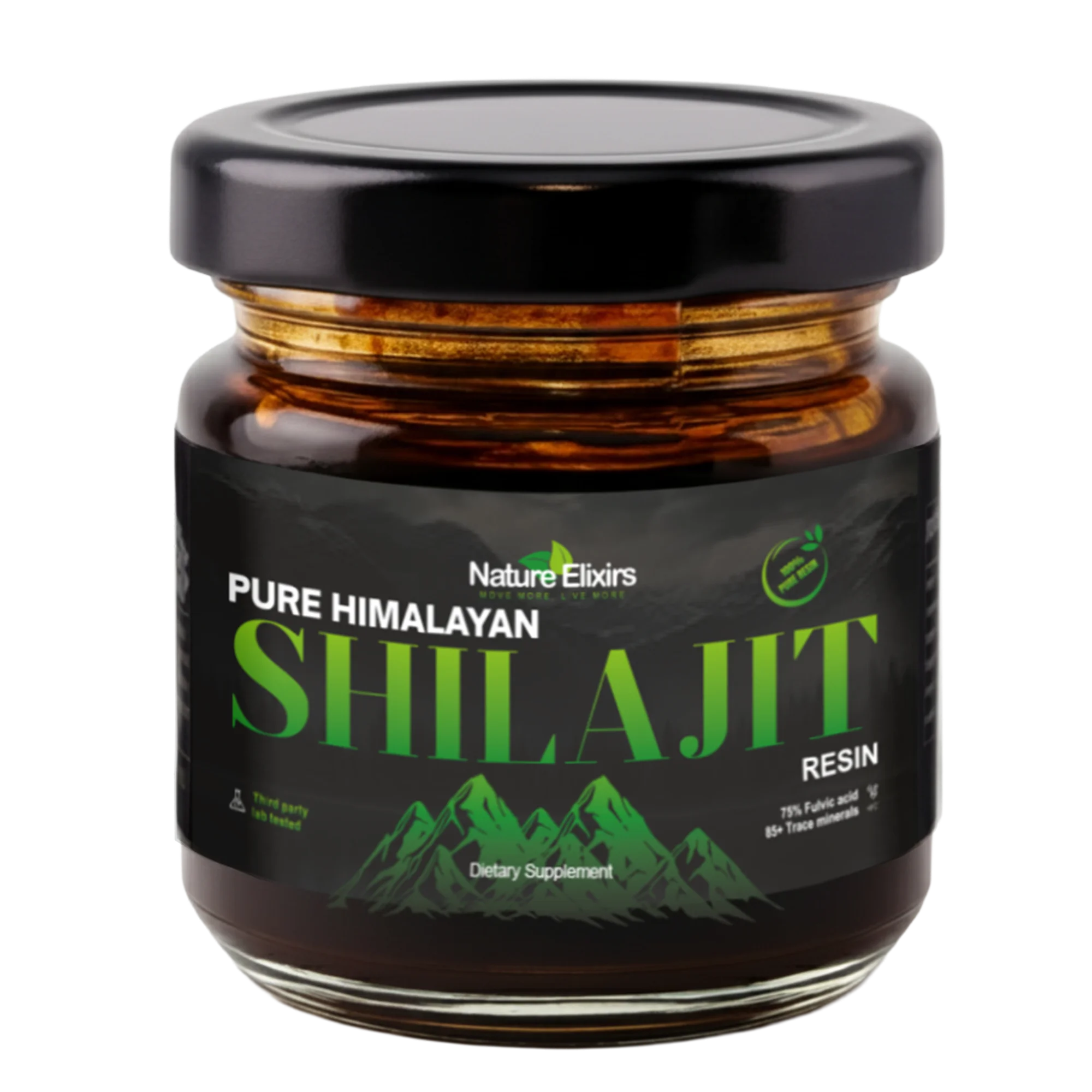
Raw shilajit requires purification before it’s suitable for consumption, removing physical debris, microbial contamination, and reducing heavy metal content. Purified Pure Himalayan Shilajit Resin contains fulvic acid and related fulvic substances, humic compounds, and trace minerals.
Proposed mechanisms include antioxidant activity, mitochondrial support via fulvic acid, and delivery of trace minerals. These are plausible, actively studied hypotheses — not established, proven human effects. A mechanism observed in a cell or animal model is a starting point for research, not a demonstrated benefit in people.
Shilajit vs Cialis: The Key Differences
| Factor | Cialis / Tadalafil | Shilajit |
|---|---|---|
| Category | Licensed medicine | Dietary supplement |
| Active ingredient | Tadalafil | Complex natural resin (fulvic acid, humic substances, trace minerals) |
| Main established purpose | Erectile dysfunction | Traditional wellness use; researched for several outcomes |
| ED evidence | Strong clinical evidence | Not established |
| Mechanism | PDE5 inhibition | Proposed mechanisms; not established as a PDE5 inhibitor |
| Onset | Typically around 30 minutes | No established acute onset for ED |
| Duration | Up to around 36 hours | No clinically established ED duration |
| Sexual stimulation | Required | Not directly comparable |
| Testosterone | Not its primary mechanism | Limited human evidence in specific populations |
| Libido | Not a direct aphrodisiac | Evidence limited |
| Regulatory category | Prescription-only medicine | Food supplement |
| Medical supervision | Clinically assessed and prescribed | Consumer supplement, self-selected |
| Main safety concern | Drug interactions/contraindications | Product purity and contamination |
Where a fair comparison isn’t possible, this table says so rather than forcing an answer.
Does Shilajit Actually Help With Erectile Function?
Current human evidence does not establish purified shilajit as a treatment for erectile dysfunction. That’s a different statement to “shilajit doesn’t work” — it simply reflects that no robust clinical trial has tested shilajit against erectile dysfunction as a primary outcome and shown a clear effect.
What exists instead is a small number of human studies looking at testosterone and exercise-related markers. It’s tempting to treat those findings as indirect proof of an erectile benefit, but that’s a leap the studies themselves don’t support. Erectile function depends on vascular and neurological processes as much as hormonal ones, and improving one biological marker doesn’t automatically translate into improving another.
Shilajit and Testosterone: Why the Difference Matters
The most commonly cited human trial here is a 2016 study by Pandit et al., published in Andrologia. It was a randomised, double-blind, placebo-controlled trial of 75 healthy male volunteers aged 45–55, who took 250 mg of purified shilajit twice daily for 90 days. The study reported statistically significant increases in total testosterone, free testosterone, and DHEAS compared with placebo, with LH and FSH remaining stable.
A few caveats matter:
- The men studied were healthy volunteers, not diagnosed with erectile dysfunction.
- The outcome measured was hormonal, not sexual or erectile function.
- It’s a single trial, with a specific purified extract, dose, and population — not a general guarantee that any shilajit product will replicate the result.
This is genuinely interesting, preliminary human evidence. It is not evidence that shilajit treats ED, and presenting it that way would misrepresent the study. Our page on shilajit research and clinical studies goes into more of this evidence in detail.
Testosterone Is Not the Same as Erectile Function
This distinction is worth spelling out clearly, because it’s where a lot of marketing overreach happens.
Testosterone can influence sexual health, and low testosterone is sometimes associated with reduced libido. But erectile function is a separate, downstream process — it depends on vascular health, nerve signalling, and blood flow, not hormone levels alone. Men with entirely normal testosterone can experience erectile dysfunction, caused by cardiovascular issues, diabetes, certain medications, or psychological factors. Conversely, raising testosterone in someone whose levels are already normal does not reliably resolve erectile difficulties.
The chain looks something like this: testosterone influences libido, libido is one input into arousal, arousal triggers the nerve and blood-flow response that produces an erection. They’re related, but they are not interchangeable steps, and a study measuring one cannot be used as proof of another.
This is precisely why a shilajit trial showing a testosterone increase cannot be presented as evidence that shilajit treats erectile dysfunction. The two are simply not the same outcome.
How Quickly Does Cialis Work Compared With Shilajit?
Cialis is designed for a measurable, acute pharmacological effect. Taken roughly 30 minutes to two hours before sexual activity, tadalafil produces a detectable effect on blood flow that supports an erection with stimulation.
Shilajit isn’t designed or studied this way. The human research that exists — including the testosterone trial discussed above — evaluates outcomes after weeks of consistent daily use, not minutes after taking a dose. There is no clinically established onset time for shilajit comparable to tadalafil’s pharmacokinetic profile, and anecdotal reports of a quick “effect” online are not the same as measured clinical data.
Cialis vs Shilajit: Duration and Timing
Cialis’s defining pharmacological feature is its long duration. Tadalafil’s effects can last up to around 36 hours after a single dose, a result of its relatively long elimination half-life of roughly 17.5 hours. This is notably longer than sildenafil (Viagra), which typically lasts several hours, so it’s worth not confusing the two — tadalafil’s extended window is specific to tadalafil, not to PDE5 inhibitors generally.
Shilajit has no equivalent, clinically established duration profile for any sexual health outcome. Its research is built around sustained daily supplementation over weeks or months, evaluating cumulative markers like testosterone rather than a single measurable window of pharmacological action. Comparing “how long Cialis lasts” with “how long shilajit lasts” isn’t really a fair question, because the two aren’t studied on the same timescale or for the same outcome.
What About Libido?
Libido (sexual desire) and erectile function (the physical mechanism of an erection) are related but distinct. Libido is shaped by psychological factors, hormonal balance, stress, and general health. Erectile function depends more directly on nerve signalling and vascular blood flow.
Tadalafil is not a libido-enhancing drug. It supports the physiological mechanism of an erection once arousal is already present — if desire isn’t there, Cialis won’t create it.
Claims that shilajit increases libido should be weighed against the actual evidence, which remains limited. Some proposed mechanisms — testosterone support, reduced fatigue — could plausibly relate to sexual interest, but no well-powered human trial has measured libido as a primary outcome for shilajit.
Shilajit vs Cialis for Men With Erectile Dysfunction
If you’re reading this because you’re personally dealing with erectile difficulties, a few points are worth knowing.
ED rarely has a single cause. Cardiovascular health is often central, since erections depend on healthy blood flow. Diabetes, high blood pressure, certain medications, hormonal imbalances, and psychological factors such as stress or anxiety can all play a role, sometimes together. Persistent or new-onset ED deserves a proper medical assessment rather than a supplement-led approach, partly because it can occasionally be an early signal of underlying cardiovascular or metabolic issues.
Tadalafil has an established, well-documented role in ED treatment once a clinician has assessed suitability. Shilajit should not be treated as a substitute for that assessment, or as a proven ED treatment in its own right.
Can Shilajit Replace Cialis?
No — current evidence does not support replacing prescribed tadalafil with shilajit.
Tadalafil has extensive clinical trial evidence specifically for erectile dysfunction and is designed to target the exact physiological mechanism involved. Shilajit has not been established as an ED treatment, and its research focuses on different outcomes entirely. Stopping, reducing, or substituting a prescribed medicine is a decision that should only be made with a doctor, not on the basis of supplement marketing or online comparisons. If ED symptoms persist, that’s a reason to seek medical evaluation, not to self-manage with a different product category.
Can You Take Shilajit With Cialis?
There is insufficient evidence to establish whether combining shilajit with tadalafil is safe or effective, and this article isn’t going to speculate about an interaction that hasn’t been properly studied.
Herbal and supplement products aren’t evaluated to the same regulatory standard as prescription medicines, which means potential interactions are often simply unknown rather than confirmed safe. If you’re taking prescribed Cialis, the responsible step is to speak to your doctor or pharmacist before adding any supplement, shilajit included, so they can consider your specific health history and current medications.
Is Cialis Safer Than Shilajit?
There’s no simple answer — safety depends on the product, the individual, and how it’s used.
Tadalafil carries clinically important contraindications. It should never be combined with nitrate medicines (commonly used for angina) or with riociguat (used for pulmonary hypertension), as both combinations can cause a dangerous, potentially life-threatening drop in blood pressure. Men with certain cardiovascular conditions, those taking alpha-blockers, or those who consume excessive alcohol need clinical assessment before starting tadalafil. A prolonged or painful erection (priapism) is a recognised medical emergency requiring urgent attention. This is general information, not personalised medical advice — always discuss your own situation with a doctor or pharmacist.
Shilajit’s main safety concern is different in nature: it’s about product quality rather than pharmacological interaction. Because shilajit is harvested from mineral-rich rock, contamination — including heavy metals — is a recognised risk if the material isn’t properly purified and tested. That makes sourcing and independent testing considerably more important for shilajit than for a standardised pharmaceutical tablet.
Heavy Metals and Shilajit Quality
Raw, unpurified shilajit can contain trace contaminants from its geological origin, including lead, arsenic, cadmium, and mercury, along with potential microbial contamination. This doesn’t mean every shilajit product is contaminated — proper purification is specifically designed to reduce these risks — but it’s a genuine reason to be selective about sourcing.
Key considerations include:
- Purification quality, which varies significantly between suppliers and directly affects contaminant levels.
- Batch-specific testing, which is far more meaningful than a generic certificate from an unrelated production run.
- Independent laboratory verification, rather than testing performed solely in-house.
Our detailed guide to shilajit safety and heavy metal risk covers this in more depth and is worth reading before choosing any shilajit product.
What Should UK Consumers Look For When Buying Shilajit?
Product quality, not marketing claims, is what actually protects you as a buyer.
- Batch-specific Certificate of Analysis (CoA) tied to the exact batch you’re purchasing — see our guide to shilajit certificates for what to look for.
- Heavy metal testing covering lead, arsenic, cadmium and mercury, ideally published as lab-tested shilajit reports.
- Microbiological testing to rule out mould and bacterial contamination.
- Independent lab verification, rather than in-house-only testing.
- Clear sourcing and purification information.
- Transparent dosage guidance — our how-to-use guide covers typical serving practices.
- Realistic claims — be cautious of any product describing itself as “natural Cialis” or claiming to treat a medical condition.
Understanding how to spot genuine versus adulterated shilajit is worth doing before buying from any brand, given how variable quality is across the category.
Shilajit vs Cialis: Which One Is Better?
There isn’t a single “better” answer — it depends entirely on the goal.
| If your goal is… | What the evidence says |
|---|---|
| Treat diagnosed ED | Tadalafil has established clinical evidence |
| On-demand ED treatment | Tadalafil is specifically designed for this |
| General wellness | Shilajit is a supplement with limited evidence |
| Testosterone support | Shilajit has preliminary human evidence in specific populations |
| Libido | Neither should be presented as a universal solution |
| Replace prescribed tadalafil | Not supported by current evidence |
The two products aren’t really competing for the same role — one is a targeted medical treatment, the other a traditional supplement with a smaller evidence base covering different ground.
What the Research Really Says
Strong clinical evidence
- Tadalafil for erectile dysfunction — extensive clinical trial data supporting its licensed indication.
Preliminary human evidence
- Shilajit and testosterone — a small number of controlled trials, notably Pandit et al. (2016), report increases in testosterone markers in healthy men over 90 days.
- Shilajit and exercise-related outcomes — early research, including work by Keller et al. (2019), has examined markers such as fatigue-related decline in muscular contraction in recreationally active men.
Mechanistic evidence
- Proposed antioxidant, mitochondrial, and mineral-delivery mechanisms for shilajit, mostly derived from laboratory and animal research rather than confirmed human clinical outcomes.
Insufficient evidence
- Shilajit for erectile dysfunction specifically — no established human clinical trials directly demonstrate this effect.
- Shilajit and libido — largely absent as a primary trial outcome.
Frequently Asked Questions
Is shilajit better than Cialis? They aren’t comparable in that sense. Cialis has an established clinical evidence base for treating ED; shilajit’s evidence covers different outcomes, mainly testosterone and general wellness, and is far more limited.
Can shilajit replace Cialis? No. Shilajit hasn’t been established as a treatment for erectile dysfunction and shouldn’t be used as a substitute for prescribed tadalafil.
Does shilajit work like Cialis? No. Cialis works through a specific, well-understood mechanism (PDE5 inhibition) for a defined window of action. Shilajit’s proposed mechanisms are different and are studied over weeks of continued use.
Does shilajit help erections? Current human evidence does not establish that shilajit improves erectile function. Related research, mostly on testosterone, exists but doesn’t directly demonstrate this outcome.
Does shilajit increase testosterone? A 2016 randomised, placebo-controlled trial in healthy men aged 45–55 found increases in total and free testosterone after 90 days of purified shilajit use. It’s one study in a specific population, so it should be read as preliminary rather than conclusive.
Can you take shilajit with Cialis? There isn’t enough evidence to say this is safe or effective. Anyone taking prescribed tadalafil should speak to a doctor or pharmacist before adding shilajit.
How quickly does Cialis work? Tadalafil typically begins working within around 30 minutes, though it can take up to two hours in some people.
How long does Cialis last? Its effects can last up to around 36 hours, though this doesn’t mean a continuous erection — it means the drug remains active and supports the mechanism when arousal is present.
Does shilajit increase libido? Evidence here is limited and largely indirect. Claims of a libido-boosting effect should be treated cautiously pending better-designed human trials.
Is shilajit a natural alternative to Cialis? Not based on current evidence. It hasn’t been shown to treat ED and shouldn’t be marketed or understood as a substitute for tadalafil.
Is Cialis stronger than shilajit? They aren’t measured on the same scale. Cialis has a defined, tested pharmacological effect for ED; shilajit doesn’t have an equivalent clinically established effect to compare it against.
Should I speak to a doctor about erectile dysfunction? Yes, particularly if it’s persistent or new. ED can have underlying causes, including cardiovascular ones, worth ruling out, and a doctor can advise on appropriate, medically supervised treatment.
The Bottom Line
Cialis and shilajit answer different questions, and the honest comparison reflects that rather than forcing an equivalence that doesn’t exist. Tadalafil is a prescription-only medicine with extensive clinical evidence for erectile dysfunction, distinguished by a long duration of action that can extend up to around 36 hours.
Shilajit’s evidence base is smaller and more preliminary, and largely concerns different outcomes — testosterone and exercise-related markers rather than erectile function itself. It should not be marketed or understood as a natural version of Cialis. That doesn’t make it without value; it simply means its role, and its claims, need to match the research that actually supports it.
If you’re considering shilajit as part of a general wellness routine, product quality is the detail that matters most — batch-specific testing, transparent sourcing, and proper purification separate a credible product from a risky one. If you’re dealing with persistent erectile difficulties, that’s a conversation for a GP or pharmacist, not a decision to make around a supplement. For readers who’ve already decided shilajit fits their routine, you can review Nature Elixirs’ Pure Himalayan Shilajit Resin and its current batch-testing documentation before deciding whether it’s right for you.
References
- Pandit, S., Biswas, S., Jana, U., De, R. K., Mukhopadhyay, S. C., & Biswas, T. K. (2016). Clinical evaluation of purified Shilajit on testosterone levels in healthy volunteers. Andrologia, 48(5), 570–575. DOI: 10.1111/and.12482. PMID: 26395129.
- Keller, J. L., et al. (2019). The effects of Shilajit supplementation on fatigue-induced decrease in muscular strength: an eight-day randomized, placebo-controlled study. Journal of the International Society of Sports Nutrition.
- NHS. Tadalafil: a medicine to treat erection problems and symptoms of an enlarged prostate. www.nhs.uk/medicines/tadalafil/
- NHS. Erectile dysfunction (impotence). www.nhs.uk/conditions/erection-problems-erectile-dysfunction/
- Electronic Medicines Compendium. CIALIS 10 mg/20 mg film-coated tablets — Summary of Product Characteristics.